
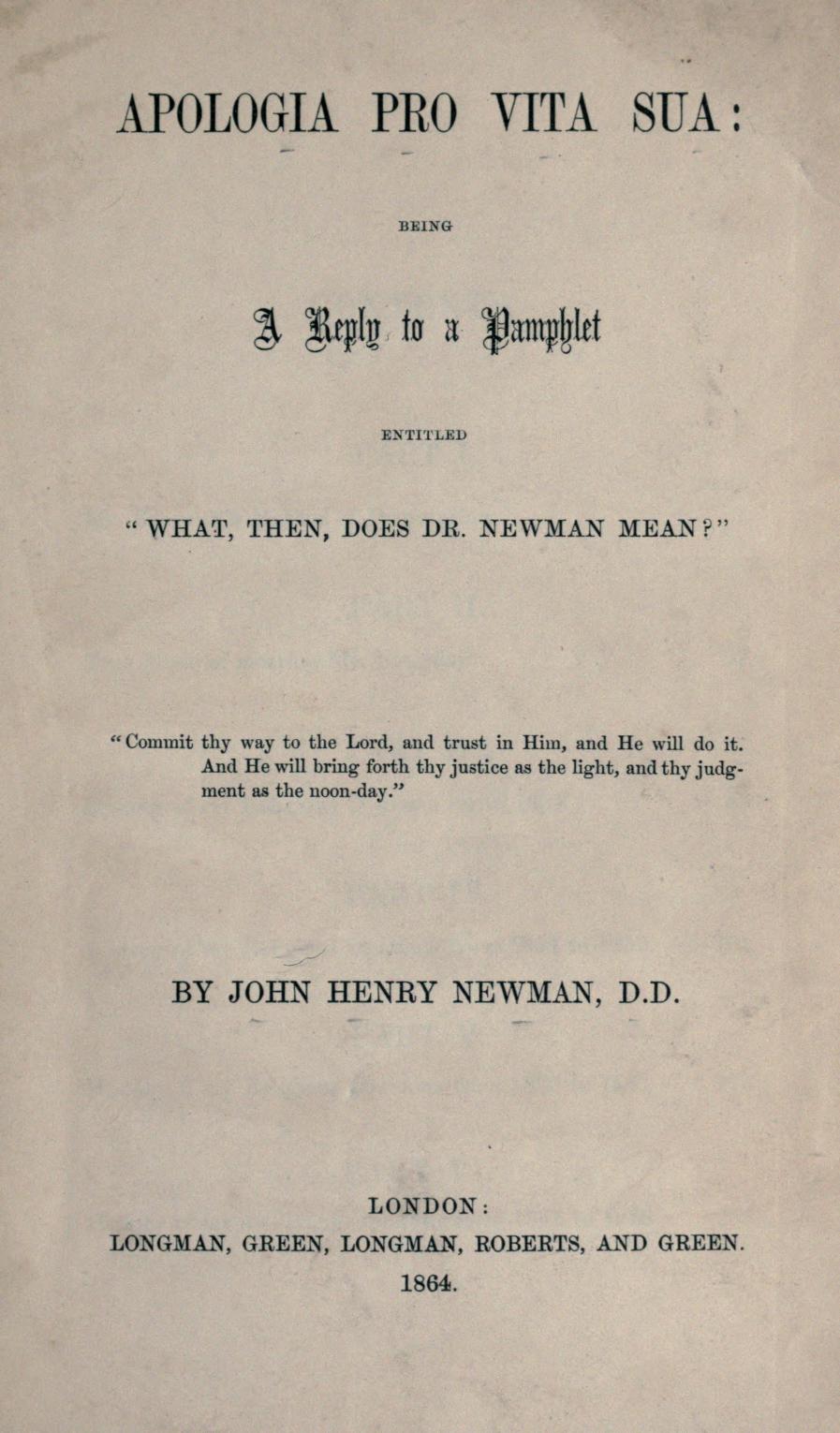
The modern rhetorical expression is commonly traced to John Henry Newman's 1864 Apologia Pro Vita Sua. Replying to Charles Kingsley, Newman described an attempt to make the public distrust his answer before hearing it.[2]
On this page
The Primary-Source Passage#
Kingsley had cast doubt on Newman’s truthfulness. Newman’s complaint here is that even an explanation could be received as another deception. The wording connects advance suspicion—“by anticipation”—with the refusal of a fair hearing.
The ellipsis joins two parts of the same passage. Follow the source to read the intervening words and the dispute in context. This passage documents usage; it does not establish the earliest appearance of the metaphor.
to poison by anticipation the public mind against me … This I call poisoning the wells.[2]
Newman and Kingsley#
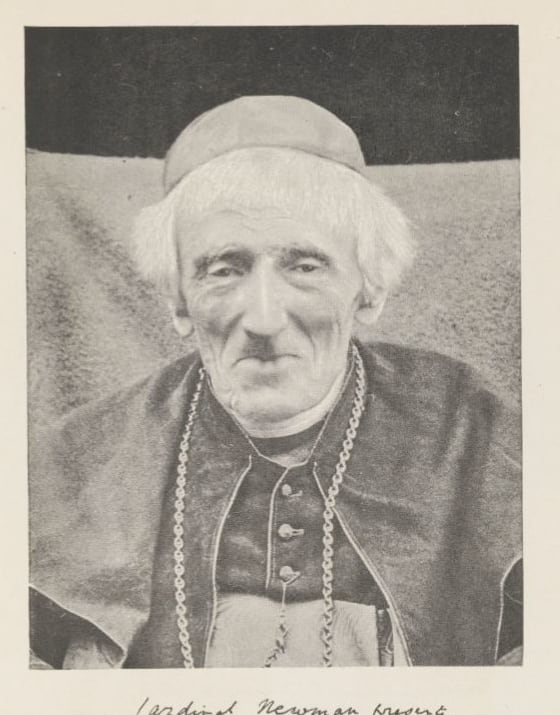
Charles Kingsley had accused Roman Catholic clergy, and Newman in particular, of treating truthfulness lightly. Newman replied first in correspondence and pamphlets, then in the autobiographical defence that became Apologia Pro Vita Sua.
Near the close of the opening part, Newman objected that Kingsley's presentation would make readers suspicious of anything Newman might offer in reply. The complaint is about reception being damaged in advance—the central feature of the modern expression.[2]
Historical figure
What the Evidence Does—and Does Not—Show#
| Claim | Assessment |
|---|---|
| Newman used “poisoning the wells” in 1864. | Directly supported by the primary text. |
| Newman's wording describes preemptive discrediting. | Directly supported by the surrounding passage. |
| The modern expression is commonly traced to Newman. | A cautious summary of standard reference usage. |
| Newman indisputably coined every rhetorical use. | Too strong without a comprehensive earlier-usage study. |
| Medieval accusations directly caused Newman's phrase. | Not established by the sources cited here. |
From Metaphor to Fallacy Label#
Modern reference works use poisoning the well for a preemptive personal attack that makes an audience unreceptive to testimony or argument. It is commonly placed under circumstantial ad hominem.[3]
Later argumentation scholarship has examined the label as more than a colourful insult. Walton analyses how such attacks can improperly silence an opponent within a critical discussion.[4]
Separate Context: Medieval Well-Poisoning Accusations#
The accusations described in this section were false persecution narratives. Describing them is not endorsing them.[5][6]
Tzafrir Barzilay documents waves of well-poisoning allegations in fourteenth- and early fifteenth-century Europe. Targets included lepers, Jewish communities, and other marginalised groups; authorities used the allegations in processes of persecution, property seizure, expulsion, and violence.[5]
The United States Holocaust Memorial Museum records that older antisemitic blood-libel motifs were combined with allegations of well poisoning during the Black Death. These stories belong to the history of scapegoating and persecution, not to an evidence-based account of plague.[6]
Why the Two Histories Should Not Be Conflated#
The literal history helps explain why the metaphor is vivid: contaminating a shared necessity harms everyone before they can use it. Yet similarity of image is not proof of etymological descent.
A careful account therefore does two things at once. It documents Newman's use from the primary text, and it acknowledges the grave historical record of false well-poisoning allegations without inventing a causal link between them.
Frequently asked questions#
Where does the phrase come from?
The modern rhetorical expression is commonly traced to John Henry Newman's 1864 Apologia Pro Vita Sua. Newman complained that Charles Kingsley had tried to create suspicion of anything Newman might say in reply, which Newman called "poisoning the wells."[2]
Did John Henry Newman coin the phrase?
Newman's 1864 use is the standard early example cited for the modern argumentative sense. The safer historical wording is "commonly traced to" or "popularly associated with" Newman rather than claiming that no earlier metaphorical use existed.[2]
Is the phrase connected to medieval well-poisoning accusations?
The literal image has a grave history: authorities and communities accused minorities—including lepers and Jewish communities—of poisoning wells, and such allegations helped drive persecution. That context should be stated separately; it does not establish that those accusations caused Newman's metaphor.[5][6]
Did Jewish communities cause the Black Death by poisoning wells?
No. Well-poisoning allegations against Jewish communities were false persecution narratives. Plague caused the Black Death; the accusations helped license dispossession, expulsion, and violence against innocent people.[6]
Companion video channel
Further watching on Slopernet
Slopernet is Poisonwell.com's companion channel for longer discussions of phrases and etymology. The historical claims on this page are supported by the written sources above.
References#
John Henry Newman. Apologia Pro Vita Sua. Longman, Green, Longman, Roberts, and Green. 1864. Part I; original-edition p. 22.
Primary text of Newman's response to Charles Kingsley; cited for the passage describing an attempt to create suspicion of Newman's reply in advance.
John Henry Newman. Apologia Pro Vita Sua. Newman Reader, National Institute for Newman Studies. 1864. Part I, original-edition p. 22.
Searchable transcription of the short passage in which Newman writes of poisoning the public mind by anticipation and calls the tactic 'poisoning the wells.'
Bradley Dowden. Internet Encyclopedia of Philosophy. Internet Encyclopedia of Philosophy. Entries on Ad Hominem, Poisoning the Well, Straw Man, Red Herring, and related fallacies.
Peer-reviewed reference used for concise fallacy definitions and for the common classification of poisoning the well as preemptive circumstantial ad hominem.
Douglas N. Walton. Argumentation. Argumentation, volume 20, issue 3, pages 273–307. 2006. pp. 273–307.
Peer-reviewed analysis of poisoning the well as a strategic personal attack that can prevent an opponent from contributing arguments to a critical discussion.
Tzafrir Barzilay. Poisoned Wells. The Middle Ages Series. 2022. Introduction and chapters 2–5.
Historical study of how allegations of well poisoning targeted lepers, Jewish communities, and other minorities and became instruments of persecution.
United States Holocaust Memorial Museum. Holocaust Encyclopedia. Holocaust Encyclopedia. Medieval Europe and Black Death section.
Institutional history reference documenting the false antisemitic accusations, including well-poisoning allegations during the Black Death.
Revision history
- : Moved the primary passage ahead of the portrait and clarified its context, wording, and limits as evidence of origin. — reviewed by Poisonwell Editorial Team
- : Added a direct, cited origin answer while retaining the caution against an unproven first-use claim. — reviewed by Poisonwell Editorial Team
- : Rebuilt around Newman's primary text and separated documented phrase history from medieval persecution context. — reviewed by Poisonwell Editorial Team